

Independent damp & timber survey
 ⸻
The damp and timber survey that finds what is feeding the rot
Rot and woodworm are water problems that show up in timber. Damp Surveyor Near Me names the organism, says whether it is active, finds the moisture behind it and sets the repair in order - diagnosis separated from treatment selling. £350, booked online.
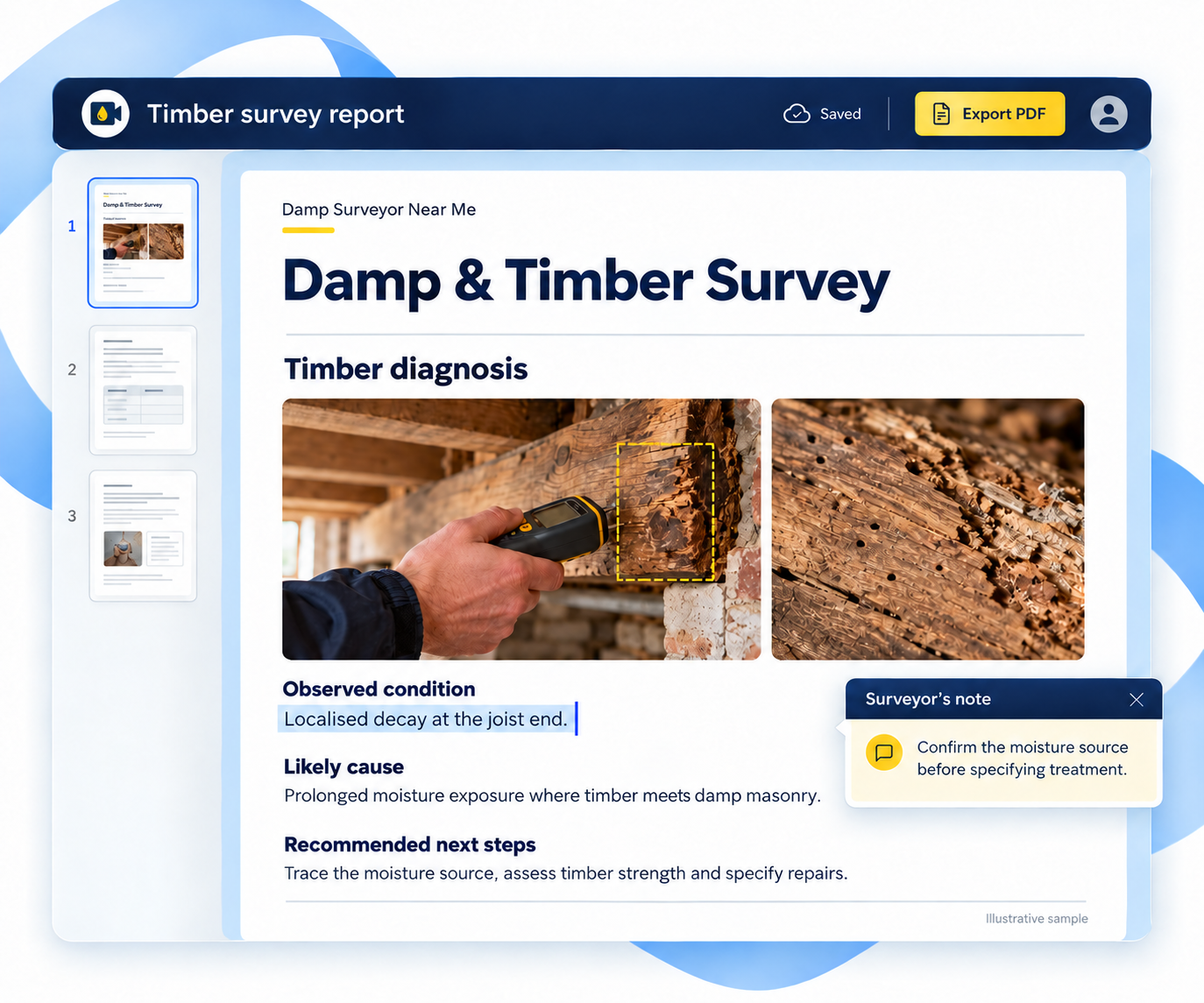
Go from rotten timber to a clear repair order in no time
A spongy floor, holes in a joist, a lender asking for a damp and timber report, a treatment quote that looks too big - the survey names what it is, whether it is active and where the water comes from.
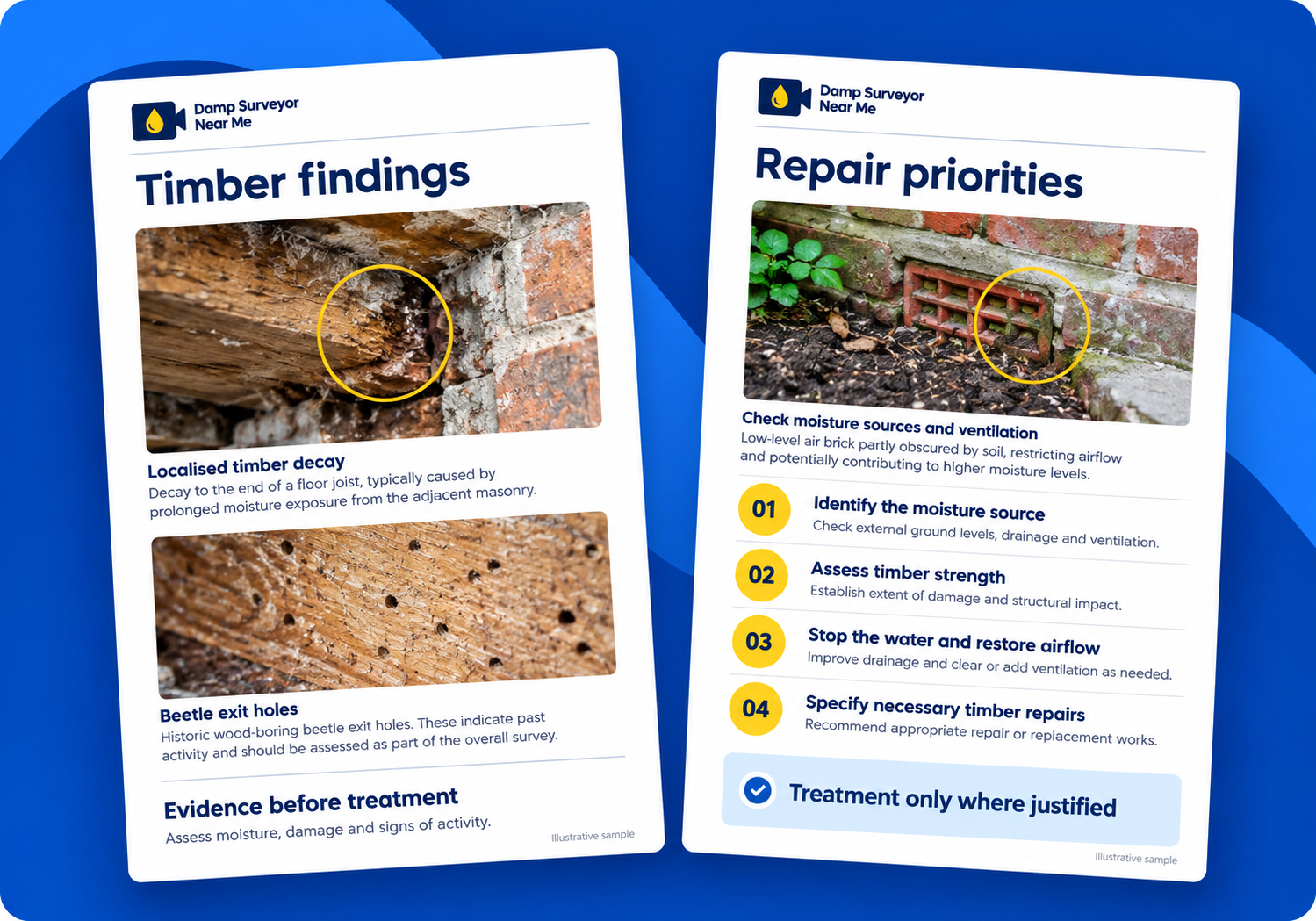
Identify, trace and resolve timber decay - all in one survey
An independent damp and timber survey identifies rot, checks woodworm activity and traces moisture sources, so repairs tackle the cause and treatment is only recommended where needed.
Wet rot stays near moisture; dry rot can spread through masonry and behind plaster. Fungal signs and moisture readings identify the type, helping avoid unnecessary strip-outs and define the right repairs.
Is it dry rot?
or wet rot?
Fresh dust, clean-edged holes and emerging beetles suggest active woodworm. Old holes alone do not prove activity. The report assesses activity, identifies the species and explains the risk to structural timber.
Is the woodworm
active?
The survey traces moisture to leaking gutters, a bridged damp-proof course, blocked sub-floor vents or plumbing leaks, so repairs address the water source before timber treatment or replacement.
Where is the water coming from?
Stop the moisture at its source before it costs more timber
If a valuation or a Level 2 or 3 survey has noted rot or woodworm, the lender wants a specialist report before completion. This one is independent, lender-ready and carries no treatment quote.
Trusted where decision matters
PCA-certificated surveyors (CSRT [number]) and a RICS-qualified surveyor (AssocRICS), fully insured. Damp Surveyor Near Me does not carry out timber treatment or damp proofing.

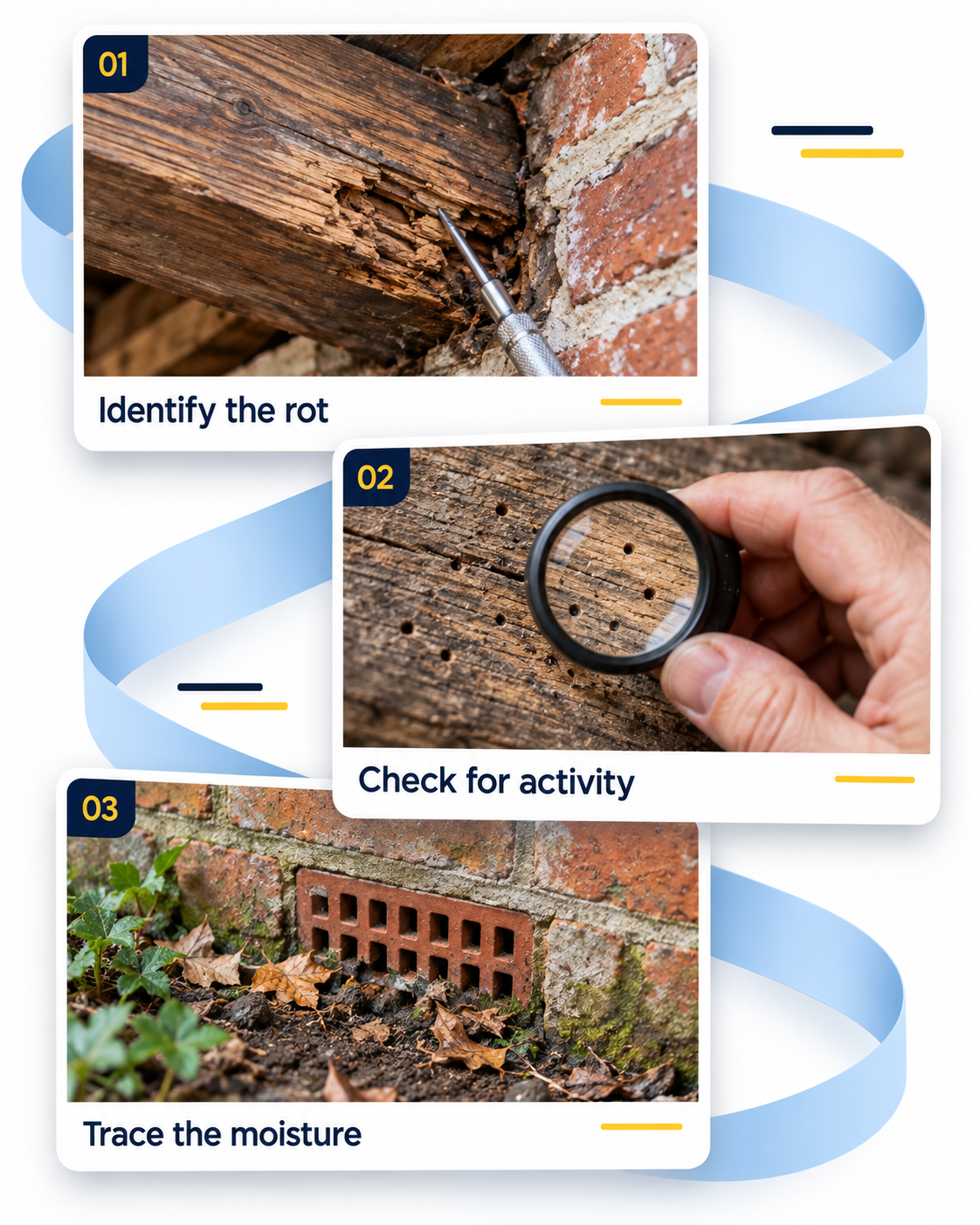
A simple path from suspected rot to sound timber, however complex
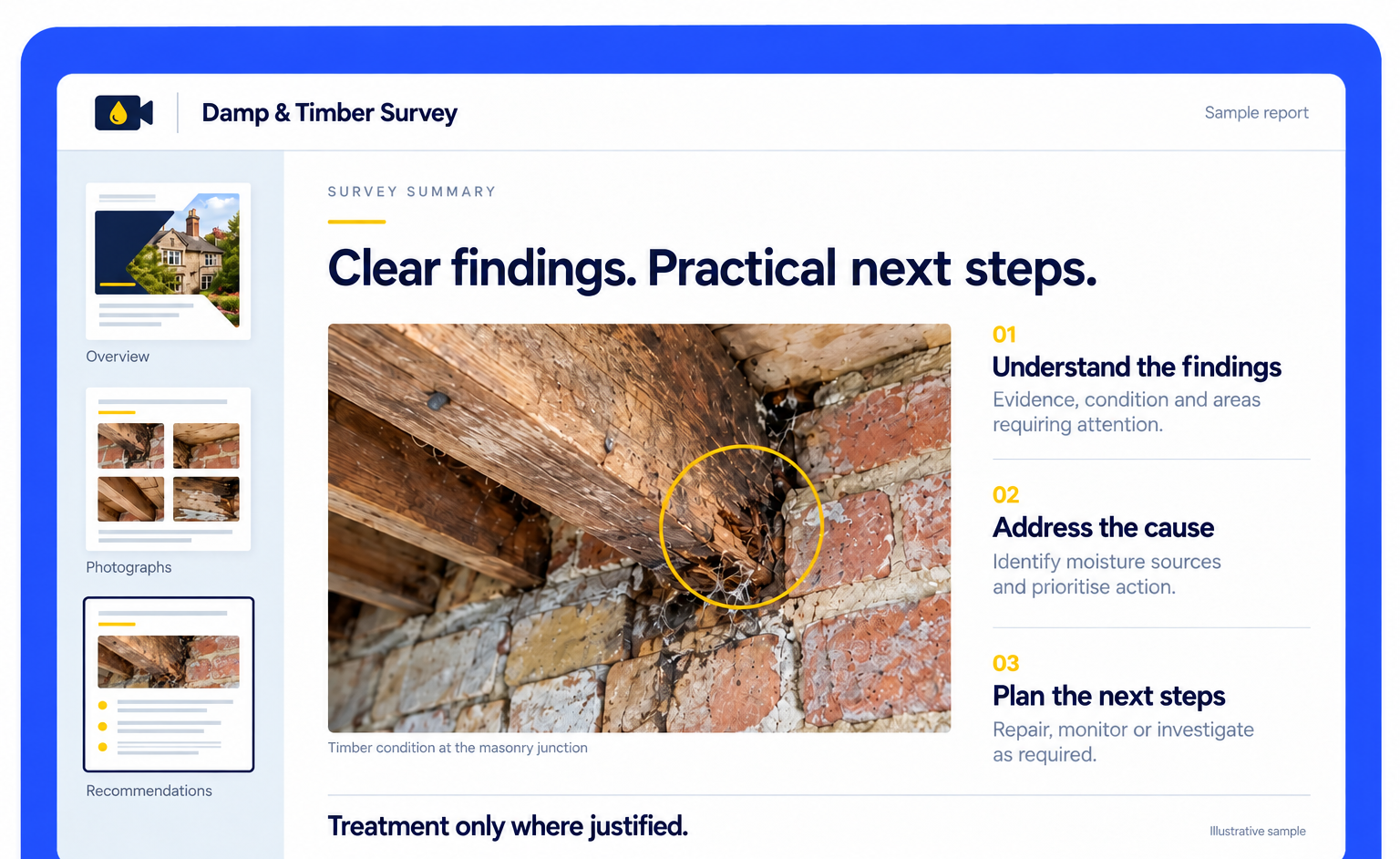
Some cases are a dead infestation that needs nothing. Others are dry rot behind tanking that has run for years. Either way, the process stays simple and the report stays clear.
Get a specialist on site
fast
Book a slot, send photos on WhatsApp, and a specialist surveyor inspects floors, voids,
roof timbers and the walls that feed them
non-intrusive by default.
Receive an evidence-led report
Within 48-72 hours: annotated photos, graded timbers, the organism and its activity, the moisture source, and the repair in the right order.
Act with every stakeholder aligned
Forward it to a lender, solicitor, contractor, freeholder or vendor. Independent findings are what they act on - a contractor's quote
is not.

“We needed to identify the root cause of damp for a high profile case, and Damp Surveyor Near Me was perfect for a comprehensive damp and mould survey, fast.”
Alex Gillbert
Director of Earthlings

Get initial free assessment to discuss your damp & mould problem and explore your options, without commitment.
Start damp assessment for free
Start damp assessment for free
Get initial free assessment to discuss your damp & mould problem and explore your options, without commitment.
Product
Damp and mould survey
Solutions
Concierge
Company
About us
Recourses
Blog
Get in touch
Contact
Damp and timber survey FAQs
How much does a damp and timber survey cost in London?
£350 for a typical London house or flat - one dwelling, up to three storeys - booked online, with the written report included. The price does not change with the number of rooms affected. Independent London damp and timber surveys published elsewhere run from about £190 to £400, and free surveys from treatment companies are priced into the treatment they recommend. Blocks of flats, larger properties and commercial premises are quoted from the scope.
What does the survey include?
An in-person inspection of accessible structural and joinery timbers - floors, sub-floor voids, roof timbers, lintels, skirtings and stairs - probed and moisture-read, plus the walls, external defects and ventilation that supply the moisture. The report, within 48-72 hours, identifies the organism, whether it is active, the extent of damage timber by timber, the moisture source and a prioritised repair sequence, and is written to be forwarded to a lender, solicitor, contractor or landlord as it stands.
Is my woodworm active or old?
Look at the holes and what is under them. Active woodworm leaves fresh, clean-edged flight holes with pale, gritty bore dust (frass) beneath or inside them, and adult beetles emerge between May and September. Old holes are dark, weathered and empty, and in most London homes that is what they are: historic common furniture beetle in pre-1960s softwood that ended decades ago. The survey states which it is, whether the species found can damage structural timber, and whether anything needs doing - because the PCA's position is that treatment is only justified where there is evidence of active infestation.
What is the difference between dry rot and wet rot - and why does it matter?
Wet rot is any of more than fifty fungi that attack timber above roughly 30 per cent moisture content and stay where the water is - a leaking gutter, a damp joist end. Dry rot is one fungus, Serpula lacrymans, which takes hold at a lower moisture level and can travel through masonry and behind plaster to reach new timber. The two need different scopes of repair, and misnaming wet rot as dry rot is how a localised job becomes a whole-room strip-out. Woodworm is neither - it is beetle larvae, not fungus. The survey names the fungus from the evidence - mycelium, fruiting bodies, cracking pattern, moisture profile - not from a price list.
Does woodworm need treating?
Only if it is active and in timber that matters. Historic flight holes in sound softwood - the most common finding in London - need no treatment, and the PCA's own guidance is that treatment should be carried out only where there is evidence of a live infestation. Where activity is confirmed, the report says which timbers, whether the species can weaken structure, and what the moisture behind it is, so any treatment is targeted rather than a whole-house spray. Damp Surveyor Near Me sells no treatment, so a dead infestation is reported as dead.
Will woodworm or rot affect my mortgage or the sale?
Historic woodworm in sound timber rarely affects a sale or a mortgage. An active infestation, or any mention of dry rot, is different: lenders commonly make the mortgage conditional on a specialist damp and timber report, and buyers treat the findings as a negotiating point. An independent report that states the organism, whether it is active, the moisture source and the repair cost is what settles the condition - and because it carries no treatment quotation, it is the evidence a lender, solicitor or buyer can rely on.
My lender or surveyor has asked for a damp and timber report. Is this it?
Yes. When a valuation or a Level 2 or Level 3 survey notes rot, damp or woodworm, lenders commonly ask for a specialist damp and timber report before completing. This survey is that report: independent, written to be forwarded to the lender or solicitor as it stands, and with no treatment quotation attached. If you are buying and want the whole property assessed as well, the RICS Home Survey from Damp Surveyor Near Me includes the damp and timber diagnosis in the same visit.
Does the survey include the damp as well as the timber?
Yes - it has to. Rot and most insect attack only establish in timber that is damp, so the moisture is investigated as part of every survey: a leaking parapet gutter, a bridged damp-proof course, a blocked sub-floor vent, a bathroom above. That is what makes the repair order right - stop the water, dry the fabric, replace what is structurally gone, treat only what needs treating, and leave alone what can safely be left.
Will you lift floorboards?
The survey is non-intrusive by default: hatches, voids, loose boards and accessible timbers are inspected and probed. Fixed boards are lifted only with the owner's permission and only where the evidence demands it, and the report says where further opening-up is worth the cost. Nothing is drilled, sprayed or cut on the day.
Which London properties get rot and woodworm?
Victorian and Edwardian terraces - suspended ground floors over an unventilated void, joist ends built into solid walls, a century of blocked air bricks - are the classic wet rot address, and common furniture beetle is very common in their pre-1960s softwood. Converted flats and basements, where a small leak behind tanking runs for years, are the classic dry rot address. Loft conversions find rot in rafters and purlins under a roof that has leaked at the valley or parapet.
Why not a free survey from a timber treatment company?
Because it is not free - it is priced into the treatment it recommends, which is why timber treatment firms recommend treatment so often and why historic woodworm gets sprayed. An independent survey is priced to get the diagnosis right: Damp Surveyor Near Me carries out no timber treatment or damp proofing, so a dead infestation is reported as dead, wet rot is not called dry rot, and where work is justified the report defines the timbers, the organism and the purpose of the repair - avoiding both the strip-out that was never needed and the spray that never addressed the leak.
Does Awaab's Law cover rotten timber?
For council and housing association tenants in England, yes from 30 November 2026, when Phase 2 of Awaab's Law extends the fixed investigation and repair timescales to structural collapse and falling elements - which includes floors, ceilings and stairs weakened by decay - alongside excess cold and heat, falls, fire, electrical and hygiene hazards. Damp and mould have been covered since 27 October 2025. Private tenants are not yet covered; the government opened a consultation on extending the law to private tenancies in October 2026.

